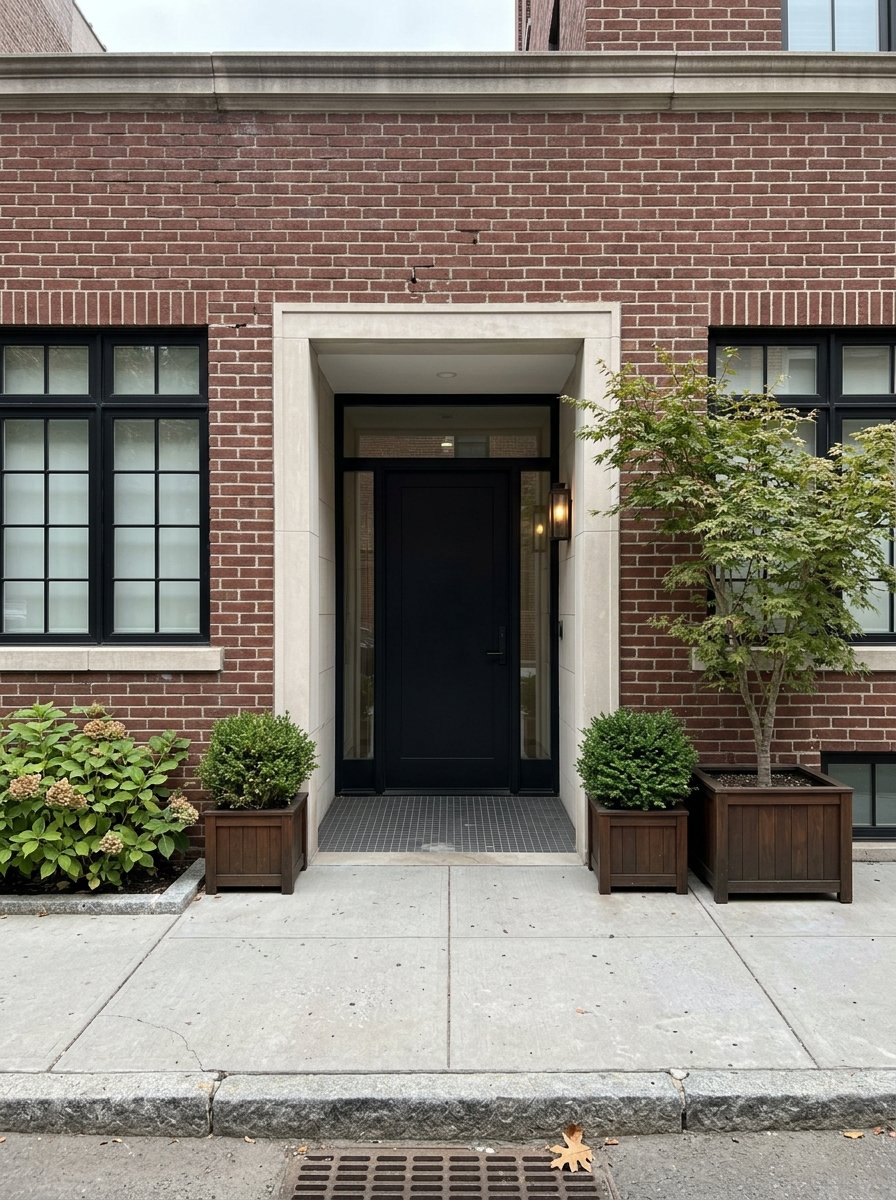
If you are thinking about buying investment property in Brookline, the numbers can look both promising and challenging at the same time. This is a high-demand, high-cost market where steady renter interest and limited land supply support long-term value, but where cash flow can be tight if you buy without a clear strategy. In this guide, you will see how condos, small multifamily properties, and rental demand compare in Brookline so you can evaluate opportunities with more confidence. Let’s dive in.
Why Brookline draws investors
Brookline sits about four miles from downtown Boston and is surrounded by Boston on three sides, which helps explain why space is limited and housing remains expensive. The town has less than 6% of its land zoned commercial, and its housing market reflects that land constraint.
Public data shows a 2025 population estimate of 63,414, a median owner-occupied home value of $1,246,800, and a median gross rent of $2,835. The owner-occupied housing rate is 46.9%, which means a large share of the town’s housing stock is renter occupied.
Brookline also benefits from a financially strong resident base. Median household income is $142,101, and 85.4% of residents hold a bachelor’s degree or higher. For investors, that points to an affluent renter pool in a town with durable housing demand.
Brookline is often an appreciation play
One of the most important things to understand about Brookline is that it tends to be an appreciation-led market rather than a high-yield market. Prices are high relative to rents, which can make current returns feel thinner than in less expensive communities.
Using Brookline’s public value and rent figures, the implied gross rent-to-value ratio is about 2.7% before expenses. That is not the same as a cap rate, but it does help show why many Brookline investments depend more on long-term appreciation, loan paydown, and disciplined underwriting than on immediate monthly cash flow.
This is especially true for condo investors. If you are buying with the goal of strong near-term income, Brookline may require more patience and a more selective approach than a market with lower entry prices.
Rental demand stays supported
Brookline’s rental demand is not random. It is tied to major employment and education centers nearby, along with strong transit access.
Boston University describes areas like Brookline Village and Coolidge Corner as walkable, connected by the Green Line and bus service, and close to the Charles River Campus, Fenway Campus, and Boston University Medical Campus. Harvard Medical School’s Longwood area is also accessible through Green Line service and bus routes.
That matters because Brookline is closely connected to major academic and medical employment hubs that continuously generate housing demand. The town also notes that residents are heavily concentrated in medicine and education, reinforcing the local connection to stable, professional employment.
Broader metro rental trends are still supportive too. In Q1 2025, Colliers reported Greater Boston multifamily vacancy at 5.8%, with asking rents at $3.23 per square foot, while construction activity was at a 10-year low. Even with units underway across the region, the overall rental backdrop remains relatively firm.
Tenant retention matters in Brookline
In a market like Brookline, strong demand does not mean landlords can ignore operations. Retention often comes down to property condition, responsiveness, and pricing discipline.
The Brookline Renters Project found about 28,000 residential units in 17,900 buildings, with roughly 7,700 buildings containing renters. It also found that many renters were hesitant to push landlords for improvements because they feared rent increases or non-renewal.
For investors, that is a useful signal. Well-maintained units and thoughtful management can help reduce turnover and support steadier occupancy, especially in older housing stock where service quality can make a noticeable difference.
Condos: lower entry point, thinner yield
For many buyers, condos are the most accessible way to enter the Brookline investment market. The purchase price is often lower than a multifamily building, and condos can work well for investors focused on long-term appreciation in a supply-constrained location.
The tradeoff is that condo economics are usually tight. With high property values and relatively modest rent-to-price ratios, a rental condo may not produce strong cash flow after taxes, insurance, association fees, maintenance, and financing costs.
Brookline’s FY2026 residential tax rate is $10.24 per $1,000 of assessed value. On an assessed value of $1,246,800, annual residential property tax works out to about $12,767 before any exemption.
That exemption is a key detail. Brookline’s residential exemption deducts $354,974 from assessed value, but it applies only to a principal residence. If you are buying a condo strictly as an investor-held rental, you generally should not expect that owner-occupant tax benefit.
When a condo can make sense
A Brookline condo may fit your strategy if you are looking for:
- A lower barrier to entry than a multifamily purchase
- Long-term appreciation potential
- A property type that may be easier to lease near transit and employment centers
- A more passive ownership model than managing multiple units in one building
That said, the deal still has to work on paper. In a thin-yield market, overpaying or underestimating carrying costs can quickly weaken returns.
Small multifamily: better income spread, more moving parts
If your goal is stronger income diversification, a small multifamily property may offer a better framework than a condo. Multiple units can spread fixed costs across more than one rent stream, which can help offset vacancy risk and create more flexibility over time.
Brookline’s housing stock supports that kind of strategy more than a large-apartment strategy. The town’s Renters Project shows a fragmented market with 1,487 two-family homes and 5,896 three-family homes, compared with only 201 buildings with four to eight units and 156 buildings with nine or more units.
That pattern matters. In Brookline, many investor opportunities are likely to come from smaller buildings rather than large institutional-scale assets.
Why small multifamily appeals to investors
Small multifamily properties can offer:
- Multiple income streams from one address
- More flexibility in unit-by-unit leasing strategy
- Potential upside through renovations or operational improvements
- A format that matches Brookline’s existing housing stock
Why underwriting still needs discipline
Small multifamily is not automatically a better deal. Older buildings can bring more variable repair costs, and smaller properties usually require more hands-on oversight than a single condo unit.
You also need to account for Brookline’s tax structure, maintenance needs, and regulatory environment. In a market with limited room for error, conservative underwriting is essential.
Regulations can affect your strategy
In Brookline, investment analysis should go beyond rent and price. Local rules can shape what you can build, convert, or reposition.
The town states that inclusionary zoning applies to projects creating four or more residential units through new construction or conversion from non-residential use. Brookline also describes a 15% affordable unit requirement for developments with 10 or more homes.
For smaller investors, this may matter most when comparing redevelopment potential against a simpler buy-and-hold strategy. If you are looking at a conversion or larger repositioning plan, local compliance can affect timeline, budget, and feasibility.
Brookline also reports that 10.76% of its housing units were on the Subsidized Housing Inventory as of November 18, 2025. That gives the local Zoning Board of Appeals more discretion over 40B comprehensive permits and points to a more actively monitored housing pipeline than in some nearby towns.
Condo conversion rules are specific
If you are evaluating a building for condominium conversion, Brookline has a defined local process. The town requires the master deed to be filed with the Building Department within 48 hours of recording, followed by inspections from both the Health and Building Departments.
Brookline also states that tenant protections in condo conversions are governed by Massachusetts law. If conversion is part of your plan, that process should be reviewed carefully before you assume timeline or pricing upside.
Short-term rentals are not an easy fallback
Some investors assume short-term rental income can offset thin long-term returns, but Brookline’s rules are strict. The town says the operator must own the unit, use it as a primary residence for at least 183 days in the calendar year, register and inspect the unit, and pay a $275 fee.
Certificates can last up to five years, and violations can be fined up to $300 per day. Units subject to inclusionary housing rules or other income restrictions are not eligible.
In practice, that means short-term rentals are not a simple backup plan for a conventional investor-owned rental property. If your numbers only work with short-term rental assumptions, you may need to revisit the deal.
Older housing stock needs careful review
Brookline’s housing stock creates opportunity, but it also requires attention. Older properties can offer value-add potential, yet they may come with more maintenance demands and compliance considerations.
The town’s materials note that for older rentals, owners must also pay attention to Massachusetts lead-law obligations to de-lead rental properties where required. Demolition delay rules and local historic districts can also slow tear-down or major exterior redevelopment plans.
That does not make older properties a bad investment. It just means your due diligence should include condition, permitting, and renovation constraints from the start.
A practical way to compare options
If you are deciding between a Brookline condo and a small multifamily, it helps to frame the choice around your primary goal.
| Property type | Typical advantage | Main tradeoff |
|---|---|---|
| Condo | Lower entry point and appreciation potential | Thinner cash flow after expenses |
| Small multifamily | Multiple income streams and operational upside | More management and variable building costs |
In either case, Brookline usually rewards a long-term mindset. This is a market where location, supply constraints, and renter demand can support value over time, but where success often depends on buying well and managing carefully.
What smart Brookline investors watch closely
Before you move forward, focus on the factors that most often shape outcomes in Brookline:
- Purchase price relative to realistic rent
- Property taxes and other fixed carrying costs
- Building condition and expected capital needs
- Transit access and proximity to major employment centers
- Whether your strategy depends on appreciation, income, or both
- Any local rules affecting redevelopment, conversion, or rental use
A Brookline investment can be compelling, but it usually works best when you are clear about the tradeoffs. The strongest opportunities often come from matching the right property type to the right hold period and operating plan.
If you want a data-first view of how a Brookline condo or multifamily property fits your goals, Gathers Realty Group can help you evaluate pricing, rental potential, and strategy with clarity.
FAQs
Is Brookline a good place to buy rental property?
- Brookline can be attractive for rental property if you are comfortable with a high-cost, appreciation-driven market where renter demand is supported by transit access, universities, medical centers, and a relatively affluent tenant base.
Are Brookline condos good investments for landlords?
- Brookline condos can work for landlords focused on long-term appreciation, but many investor-owned condos have thin cash flow because prices and carrying costs are high relative to rents.
Do Brookline multifamily properties usually cash flow better than condos?
- Small multifamily properties may offer better income diversification than condos because they can generate multiple rent streams, but returns still depend heavily on purchase price, taxes, building condition, and management.
What is the property tax rate for Brookline residential investment property?
- Brookline’s FY2026 residential tax rate is $10.24 per $1,000 of assessed value, and the principal-residence residential exemption generally does not apply to investor-held rental property.
Can you use a Brookline investment property as a short-term rental?
- Brookline tightly regulates short-term rentals, and the operator must own the unit and use it as a primary residence for at least 183 days per year, so many traditional investor-owned rentals will not qualify.
Does Brookline allow condo conversions?
- Brookline allows condo conversions, but the process includes local filing and inspection requirements, and tenant protections are governed by Massachusetts law.
What supports rental demand in Brookline, Massachusetts?
- Brookline rental demand is supported by proximity to Boston, access to the Green Line and bus routes, and nearby academic and medical employment centers such as Boston University and the Longwood medical area.