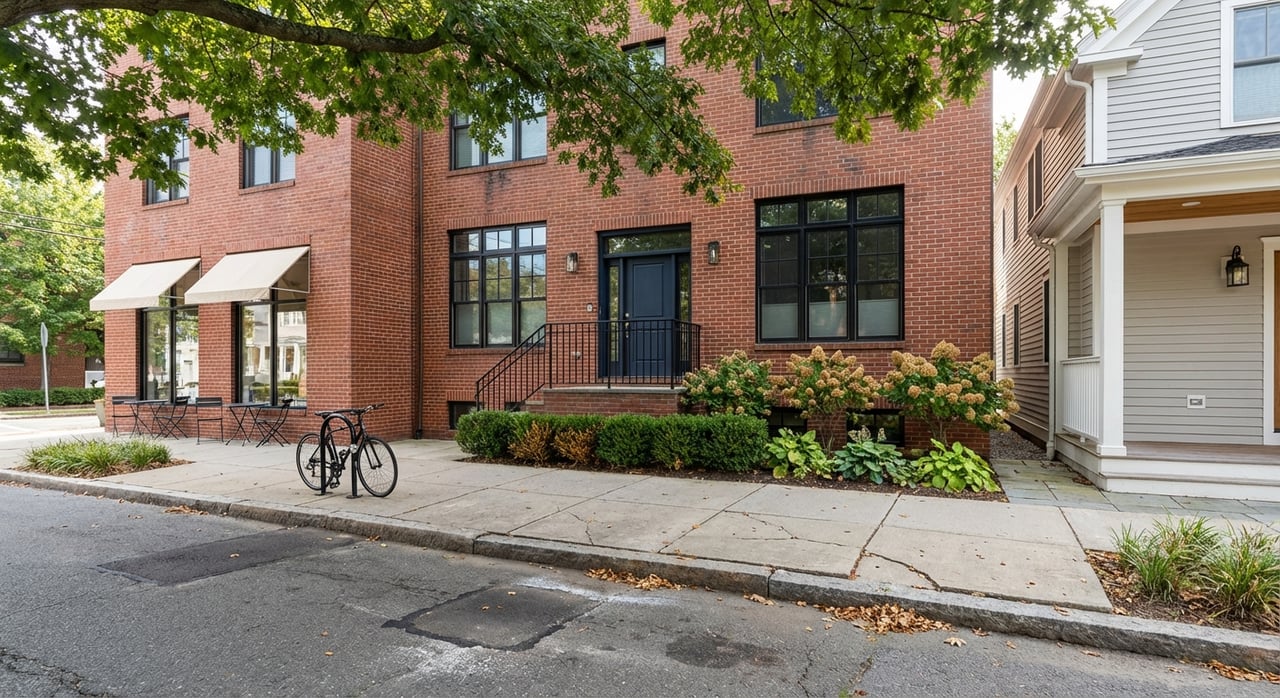
Craving a home where you can grab coffee, hop on the T, and check off errands without getting in the car? If you’re shopping in Brookline, you have options that put daily life within a short walk. You also want to weigh price, product type, and realistic trade-offs that come with high-demand, walkable blocks. This guide breaks down Brookline’s most walkable pockets, what you’ll typically find there, and how to shop smart. Let’s dive in.
What walkability means in Brookline
Walkability here means a compact mix of shops, restaurants, grocery options, and short walks to a Green Line stop. Many core blocks earn high Walk Score ratings, often in the 80s to 90s, signaling strong access to daily needs and transit. You can use a quick lookup to see how a specific block scores on Walk Score.
Walkability often comes with higher price-per-square-foot and tighter inventory. Smaller units near village centers tend to move quickly, so it helps to define your must-haves before you start touring.
Transit sets the map
Brookline’s walkable areas follow the MBTA Green Line. The D branch serves Brookline Village, Brookline Hills, and Reservoir, while the C branch runs along Beacon Street through Coolidge Corner and into Cleveland Circle. For an overview of the Green Line’s Brookline stops and routing, see the Green Line D branch reference.
Planned accessibility upgrades and station consolidation on the C branch are active topics. These changes can shift practical walking distances to a station for certain blocks. For current reporting on proposed consolidations and closures, review recent Boston Globe coverage of the C branch plans.
Most walkable neighborhoods
Coolidge Corner
- Walkability and transit: One of Brookline’s highest-walkability cores with frequent foot traffic and C-branch stops nearby. Many blocks score in the low 90s on Walk Score.
- Housing mix: Pre-war brick apartment buildings and brownstones (many condo conversions), small multi-family buildings, plus select newer condo projects with elevator service.
- Price snapshot: Aggregator medians have ranged from roughly the low $1M range for closed sales to higher list medians. One-bed condos often start in the mid-$600K to $900K range. Many two-bed condos cross $1M. Single-family and townhouse options are limited and typically trade at multi-million prices.
- Lifestyle highlights: An urban-village feel with cafés, restaurants, grocery options, an independent bookstore, and the beloved Coolidge Corner Theatre.
Washington Square
- Walkability and transit: A concentrated village on Beacon Street with C-branch access and several bus routes. Many buyers like the slightly quieter feel compared with Coolidge Corner.
- Housing mix: Pre-war brick buildings converted to condos, small multi-family properties, and scattered single-family homes at the edges.
- Price snapshot: Recent aggregator snapshots place medians roughly between $1.1M and $1.4M depending on listing vs sold windows. Two-bed condos near the square often trade around $800K to $1.2M, with single-family homes higher.
- Lifestyle highlights: A strong dining cluster with cafés and taverns, plus quick C-branch rides toward Longwood and downtown.
Brookline Village
- Walkability and transit: A compact, highly walkable center anchored by the Green Line D-branch stop at Brookline Village. Many residents choose it for easy access to the Longwood Medical Area.
- Housing mix: Early 1900s single-family homes on nearby streets, low-rise brownstones, numerous condo conversions, and storefront flats along Washington Street.
- Price snapshot: Aggregated neighborhood medians commonly show a range around $1.0M to $1.45M, with the most plentiful inventory in condos and smaller units.
- Lifestyle highlights: Local shops and restaurants, short T rides to Kenmore and Back Bay, and quick park access through the Emerald Necklace.
Reservoir, Cleveland Circle, Chestnut Hill edge
- Walkability and transit: Cleveland Circle is walkable to the C branch at Cleveland Circle and the D branch at Reservoir. The Chestnut Hill Reservoir loop is a major daily-life perk for walkers and runners. For context on D-branch station placements, see this Green Line D-branch map resource.
- Housing mix: Larger Tudors and Colonials near Reservoir and Chestnut Hill, plus rowhouses and 2–4 unit brick buildings closer to Cleveland Circle. Condos often come from conversions or select mid-rise buildings.
- Price snapshot: Zip-level valuations that cover these pockets trend higher than central village medians. Public profiles for nearby zips have shown ranges roughly around $1.3M to $1.8M depending on product mix and timeframe. You should always confirm with street-level comps. A general zip overview is available via City-Data’s 02445 profile.
- Lifestyle highlights: The reservoir loop, access to two Green Line branches, and a useful cluster of neighborhood shops at Cleveland Circle.
Longwood corridor: Pill Hill and Cottage Farm
- Walkability and transit: Leafy, historic neighborhoods that are walkable or a short ride to Longwood and nearby village centers. Access to Frederick Law Olmsted’s Emerald Necklace adds park connectivity. For a local history primer, explore the Brookline Historical Society’s Pill Hill tour.
- Housing mix: Larger, well-appointed Victorian and Colonial Revival single-family homes define these enclaves. Condo inventory exists but is notably thinner than in Coolidge Corner or Washington Square.
- Price snapshot: Substantial historic homes here often command some of Brookline’s highest single-family prices, commonly above $2M.
- Lifestyle highlights: Quiet residential streets, rich architectural character, and direct proximity to Longwood Medical Area and the Emerald Necklace.
The walkability premium
Walkable, transit-rich neighborhoods in the U.S. often command higher values. Policy and academic summaries consistently find that properties in more walkable areas tend to trade at a premium, though the size of that premium varies by city and product type. For a plain-English overview, see the EPA’s summary of research on how walkability is capitalized into prices in this resource.
In Brookline, expect higher price-per-square-foot in village centers, more competition for smaller units, and fewer single-family choices directly in the core. If you want a yard and a short walk to the T, you may need to prioritize the edges of these centers or accept a smaller home in a higher-priced location.
Key trade-offs to weigh
- Inventory mix: Walkable cores skew toward condos and smaller multi-family buildings. Single-family homes are scarcer and often more expensive in these areas.
- Parking: Brookline enforces strict rules. Overnight on-street parking is limited and many core units do not include deeded spaces. Confirm resident permits, guest options, and the cost of garage rentals. Start with the town’s parking FAQ.
- Building age and upkeep: Pre-war buildings offer charm and location, but older systems and big-ticket capital projects can mean higher assessments. Always review HOA reserves, budgets, and recent capital work.
- Transit construction: C-branch accessibility and consolidation work can affect short-term access and long-term stop spacing. Check current updates in recent C-branch reporting.
How to shop smart
Use this quick process to compare addresses and avoid surprises:
- Map your daily life. List grocery, coffee, pharmacy, dry cleaner, playground, and library. Walk the block at different times and map a 5–10 minute radius. A quick Walk Score check is a useful starting point, but on-the-ground impressions matter.
- Verify the transit reality. Time the actual walk to the nearest T stops. Note grade changes, crosswalks, lighting, and winter sidewalk conditions. Confirm service alerts before you rely on transfers.
- Price with both medians and comps. Aggregator medians can differ from closed-sale medians. Your final valuation should be anchored to 90-day closed comps and the specific building condition, layout, and parking.
- Assess building health. For any condo, request HOA budget, reserve levels, recent and planned capital projects, and master insurance. Ask about special assessments and elevator, roof, or facade work.
- Plan for parking. Confirm deeded or assigned spaces in writing. If none, understand the permit rules and what it costs to rent a garage nearby. The town’s parking FAQ outlines key rules.
- Watch project timelines. If you rely on a specific C-branch stop, review station plans and construction schedules in current C-branch updates.
Putting it together
If your top priority is a true walk-to-everything lifestyle, start with Coolidge Corner and Brookline Village, then compare Washington Square for a slightly quieter village feel. If you favor larger single-family options and green space while keeping reasonable access to Longwood, look at Pill Hill, Cottage Farm, and the Reservoir edges near Cleveland Circle. Define your key trade-offs early, price with recent comps, and confirm transit and parking details before you write an offer.
When you want a data-first plan tailored to your daily routine, budget, and timing, connect with a local advisor who can map options street by street and validate pricing with closed comps. If you’re ready to take the next step, schedule a free consultation with Gathers Realty Group.
FAQs
What are Brookline’s most walkable areas for buyers?
- Coolidge Corner, Washington Square, Brookline Village, Reservoir/Cleveland Circle, and the Longwood corridor (Pill Hill/Cottage Farm) offer strong walkability and Green Line access.
How does the MBTA Green Line affect walkability in Brookline?
- The C and D branches shape where daily amenities and easy commutes cluster, so proximity to these lines often boosts Walk Score and demand.
Do walkable Brookline neighborhoods cost more?
- Often yes; research finds a walkability premium on prices, though the size varies by location and housing type.
Where should I live for fast Longwood access without a car?
- Brookline Village on the D branch and Coolidge Corner on the C branch are popular choices, with other Longwood-adjacent pockets also convenient depending on the block.
How hard is parking in Brookline’s walkable cores?
- On-street overnight parking is limited and many core units lack deeded spaces, so confirm permits and consider renting a garage spot.
What should I check before buying a pre-war Brookline condo?
- Review HOA reserves, recent capital projects, upcoming assessments, and the condition of major systems like the roof, facade, elevator, and heating.