Is that price per square foot telling you the whole story in Wellesley? It can be a helpful signal, but it is easy to misread without context. If you are comparing homes across Wellesley’s villages or deciding how to price or bid, you need more than a single number. In this guide, you will learn what PPSF really measures, why it varies across town, and how to use it the right way to make a confident decision. Let’s dive in.
Price per square foot explained
Price per square foot (PPSF) is simply the sale price divided by the home’s square footage. It is a quick way to compare what buyers paid for living space across different homes.
PPSF is a descriptive ratio, not an appraisal. It summarizes how much buyers paid per unit of living area. It does not directly price the land or every feature of a home.
How you define square footage changes the result. The most common basis is Gross Living Area (GLA), which typically means above-grade, heated, finished space. Some listings include finished basements or attics in a “total finished area,” which will lower the PPSF since the denominator is larger. Be sure every comparison uses the same measurement standard.
For consistency, many professionals follow ANSI Z765 methods for measuring living area. Confirm which square-foot figure a listing or dataset uses before you run the math.
How to calculate PPSF the right way
- Use closed sale price, not list price.
- Use a consistent square-foot figure, ideally the MLS GLA or another documented source.
- PPSF = Closed sale price ÷ Selected square footage.
- When you summarize a set of comps, use medians and interquartile ranges instead of simple averages. This reduces the impact of outliers and small sample sizes.
Wellesley market context
Wellesley is an affluent suburb west of Boston in Norfolk County. The town’s appeal comes from strong commuter access, walkable village centers, and respected local institutions such as Wellesley College and several private schools. Public school performance and clear village identity help shape buyer demand.
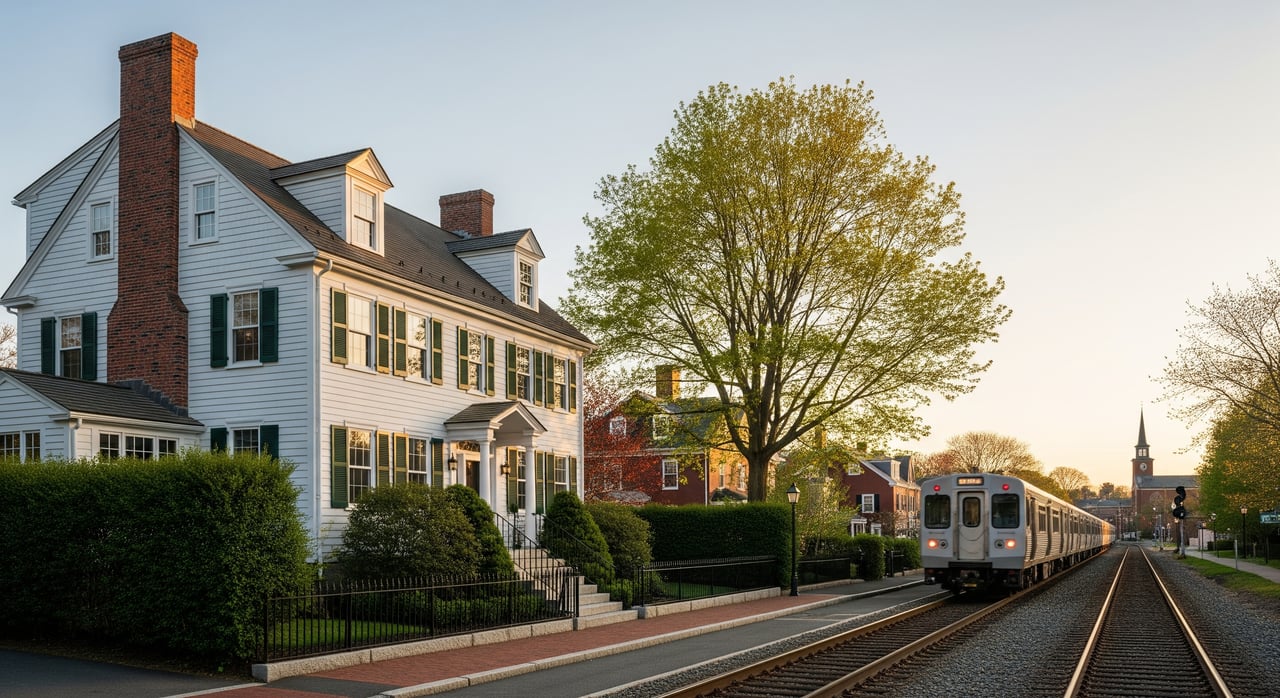
Across town, distinct neighborhoods have their own pricing patterns. Wellesley Farms, Wellesley Hills, Wellesley Square, Lower Falls, and areas like the Woodlands and Cliff Estates each mix lot sizes, housing styles, and access to commuter rail and amenities in different ways. Those differences show up in PPSF.
Inventory conditions also matter. In a tight market with limited listings, PPSF often rises as buyers compete. Seasonal timing can change the picture as well, with spring typically bringing more activity.
Why PPSF varies across homes
Several drivers push PPSF up or down for a specific property:
- Size and scale. Smaller homes often show higher PPSF. Very large homes can show lower PPSF even if the total sale price is high.
- Measurement method. Above-grade GLA will produce a different PPSF than a figure that includes finished basements or attics.
- Condition and finishes. Recent renovations, updated systems, and high-end kitchens and baths raise PPSF.
- Layout and functionality. Efficient floor plans and modern designs tend to command a premium per square foot.
- Lot size and land value. Larger or more private lots can elevate the overall sale price while making PPSF look lower, since land value is not in the numerator.
- Location within town. Proximity to commuter rail, village centers, parks, and preferred school boundaries influences demand and PPSF.
- Market timing. Hot quarters and spring selling seasons can lift PPSF; slower periods can soften it.
Village patterns to know
Wellesley Farms
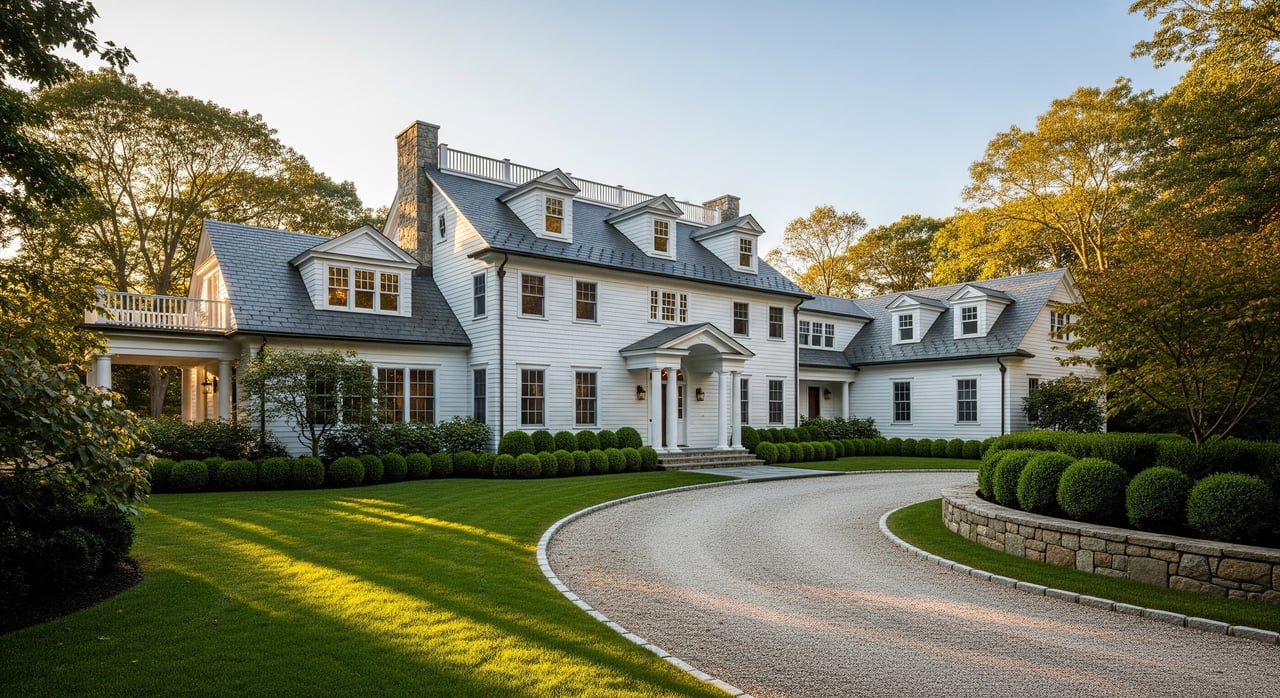
Estate-style properties, larger lots, and access to open space are common here. Total prices can be high given land value and property scale. For very large homes, PPSF can look lower because the denominator is big and much of the value sits in the land and setting.
Wellesley Hills and Wellesley Square
These areas offer village convenience and commuter rail access. Smaller and mid-size homes close to shops and transit often command higher PPSF because buyers value walkability and convenience.
Lower Falls and border areas
Closer to the Needham and Natick edges, inventory can vary. PPSF may trend lower relative to the core villages, depending on lot size, school assignment, and housing mix.
Woodlands and Cliff Estates
Custom builds and substantial renovations are common. Newer construction with modern layouts and premium materials often shows elevated PPSF.
Use PPSF as a buyer
- Start with PPSF to compare neighborhoods and size bands. Look at medians, not just single comps.
- Align measurements. Confirm whether each comp uses above-grade GLA or total finished area.
- Inspect the features. Adjust your view for lot size, privacy, layout quality, age, systems, and recent renovations.
- Translate differences into dollars. Ask your agent to quantify features like finished basements, an extra bath, or a garage.
- Set a range. Use the 25th to 75th percentile PPSF for close comps, then adjust for features to set a realistic offer band.
Use PPSF as a seller
- Focus on truly comparable sales from the same village or within about a mile in similar settings.
- Use a tight size band when possible, roughly 70 to 130 percent of your GLA.
- Present your home’s strengths. Renovations, walkability, and station proximity can justify a higher PPSF.
- Show context. Compare total price and PPSF side by side so buyers see the full picture.
- Anchor expectations with medians and interquartile ranges. Avoid setting price from a single outlier.
A defensible Wellesley valuation workflow
Use this step-by-step process to create a data-first PPSF analysis:
- Define square footage. Choose a standard such as MLS GLA above grade and document it.
- Select comps. Prioritize closed sales within the past 6 to 12 months. Extend to 12 to 24 months if the market is thin.
- Keep geography tight. Start with the same village or within about 1 mile for walkable areas.
- Match size and type. Aim for 70 to 130 percent of the subject GLA and similar property type and lot profile.
- Compute PPSF for each comp and summarize using median and the 25th and 75th percentiles. Note the sample size.
- Identify feature differences. Beds, baths, finished basement, garage, lot size, condition, and renovation scope matter.
- Apply adjustments. Use local data when available, or document clear qualitative reasoning with sensitivity ranges.
- Produce a range. Show conservative, best-fit, and aggressive PPSF, then translate to a total price range.
- Document assumptions. State measurement standard, time window, and specific adjustments.
When to build a custom model
- Unique or rare properties such as large estates, extensive acreage, or historic homes.
- New construction or recent gut renovations where finishes and layouts drive big premiums.
- Situations with multiple competing drivers, like rare lots or zoning that allows additions or accessory units.
- When you want scenario analysis, for example, sell as-is versus renovate.
- Investor-grade decisions that require reproducible methodology and sensitivity testing.
What to collect for accuracy
Gather these inputs before you run comps:
- Confirmed GLA with a breakdown of above-grade and any finished below-grade area.
- Lot size and legal description.
- Year built and the dates and scope of major renovations or capital improvements.
- Room counts, bath counts, and special features such as finished basement, garage, or in-law space.
- Proximity to commuter rail and village centers.
- Preferred comp time horizon: 6, 12, or 24 months depending on inventory.
Mistakes to avoid
- Mixing measurement methods. Do not compare above-grade GLA to total finished area.
- Relying on one standout comp. Always use a set and summarize with medians and percentiles.
- Ignoring features and land. PPSF alone does not price lot size, privacy, or premium finishes.
- Overlooking seasonality. Short time windows can give a misleading signal.
- Skipping documentation. Record your assumptions so you can explain the result.
How to pair PPSF with local evidence
To deepen your analysis, consult closed sales in the local MLS, the Town of Wellesley Assessor for lot sizes and assessed land versus building value, and the Norfolk County Registry of Deeds for verified sale prices. Check MBTA maps for commuter access and Wellesley Public Schools boundary information for accurate school assignments. These sources help you confirm measurements, lot specifics, and location context so your PPSF comparisons are apples to apples.
Turning PPSF into decisions
Used well, PPSF helps you skim the market quickly, spot outliers, and frame negotiation strategy. The key is consistency in measurement and careful, feature-level adjustments across tight, local comps. That is how you turn a shorthand ratio into a pricing strategy you can defend.
If you want a tailored assessment for your home or a target buy, our team pairs neighborhood insight with a clear, documented method and sensitivity ranges you can trust. Reach out to schedule a quick discovery call with Gathers Realty Group.
FAQs
What does price per square foot measure in Wellesley?
- It shows the sale price divided by a home’s measured living area, usually above-grade GLA, and helps compare what buyers paid for space across similar homes.
How should I measure square footage for PPSF?
- Use a consistent standard such as MLS-reported GLA based on ANSI Z765 methods, and confirm whether finished basements or attics are included or excluded.
Do finished basements count in PPSF comparisons?
- Often they are excluded from GLA and reported separately, so always check the listing details and compare like with like to avoid distorting PPSF.
Why do large estates show lower PPSF but higher prices?
- Much of the value sits in land and scale, so the total price can be high while the price per square foot looks lower due to a very large denominator.
How does seasonality affect PPSF in Wellesley?
- Spring often brings more activity that can lift PPSF, while slower seasons may soften it, so use recency and a clear time window for comps.
Can I use PPSF alone to make an offer?
- Use it as a starting point, then apply feature adjustments for lot, layout, condition, and location to translate PPSF into a realistic offer range.
What is a “good” PPSF for my Wellesley home?
- There is no single number; focus on a median PPSF for close comps in the same village and size band, then adjust for your home’s features and condition.